The ballot paper gets counted, the results declared, and the winning candidate takes their seat. For most voters, that is where their active involvement in the democratic process ends. It is also, in a meaningful sense, where democracy is supposed to begin.

The period between elections — which is to say, most of the time — is when representatives govern, legislate, and make decisions that affect people’s lives. Understanding what happens during that period, and how voters can remain part of it, is not a specialist interest. It is the difference between democracy as a periodic ritual and democracy as a functioning system.

From Votes to Representation

The transition from election to representation is less automatic than it appears. A candidate wins a seat and becomes a representative — but what that means in practice depends enormously on how they choose to do the job, and on the systems that exist to hold them to account.

In the weeks following an election, new MPs take their seats in the Commons; new MSs are sworn into the Senedd. Committees are formed, ministerial appointments made, and the business of the legislature resumes. For backbench representatives — those not appointed to government or opposition frontbenches — the work settles into a rhythm of constituency casework, parliamentary questions, committee appearances, and voting.

That rhythm is largely invisible to voters. It happens in offices, committee rooms, and chamber debates that attract little public attention. The representative is, in one sense, working on your behalf throughout. In another sense, without mechanisms to observe and question what they are doing, the relationship is largely one of trust.

How Accountability Works in Practice

Formal accountability mechanisms exist, but they operate unevenly. The most significant, in theory, is the next election — the moment at which voters can reward or remove their representative based on how they have performed.

In practice, political accountability after an election is blunted by several factors:

  • Safe seats reduce the electoral risk of poor performance.

  • Party loyalty means voters often judge the party rather than the individual.

  • Information gaps make it difficult to find out what a representative has actually done.

Between elections, the available mechanisms are thinner. Parliamentary questions, select committees, and constituency surgeries are not trivial, but none of them gives ordinary voters a direct, structured way to assess and challenge their representative’s performance on an ongoing basis.

The Information Gap

One of the more significant barriers to political accountability after an election is simply not knowing what your representative has done. Voting records are publicly available, but navigating those records requires time and familiarity with parliamentary procedure.

This information gap is not accidental. It is a structural feature of systems that were not designed with active constituent oversight in mind. Addressing it requires both better civic infrastructure — clearer, more accessible records of representative activity — and voters who understand that the information exists and is worth consulting.

What Active Participation Looks Like

Accountability between elections does not require extraordinary effort. It requires a modest but consistent level of attention:

  1. Checking how your representative voted on issues that matter to you.

  2. Attending a surgery or a local meeting.

  3. Contacting them when specific issues arise.

  4. Making an assessment based on their full record when the next election arrives.

The Open Party’s model of representation is premised on this kind of ongoing relationship. Representatives who know their constituents are paying attention tend to behave differently from those who treat the period between elections as largely unobserved.

Democracy Doesn’t Pause Between Elections

Voting matters. It is the most direct expression of democratic preference available to most people. But it is not sufficient on its own. A democracy in which citizens engage intensely for a few weeks every few years and disengage entirely in between is one that leaves a great deal of space for commitments to be quietly abandoned.

The period after you vote is not a gap in democratic life. It is democratic life. How it is used determines whether the system functions as it is supposed to, or simply as it appears to.
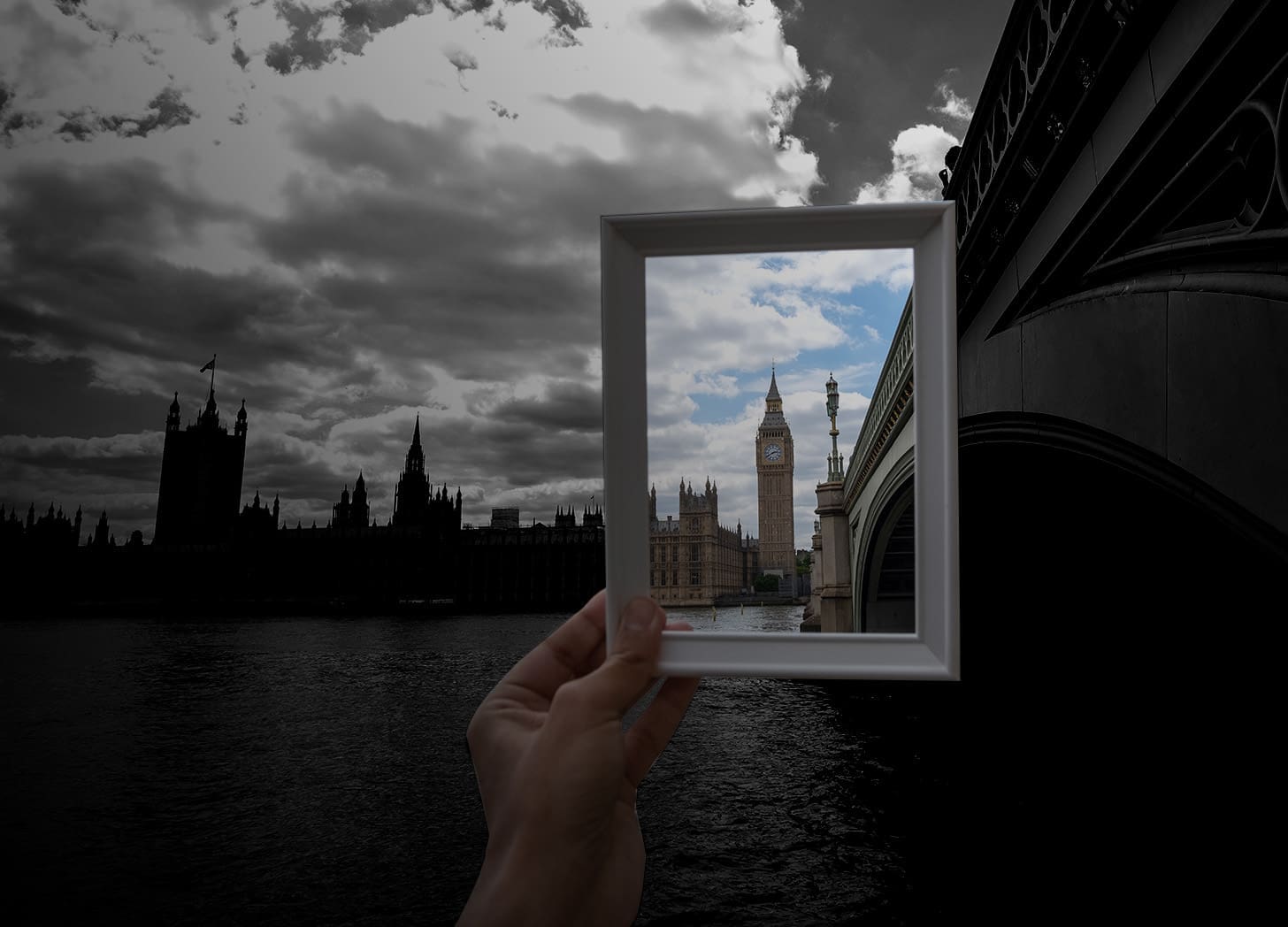
Every election cycle brings a familiar lament: turnout is down, young people aren’t engaged, voters don’t understand the issues. The diagnosis is always some variation of public apathy. Rarely does the conversation turn to what the system itself demands of people — or, more pointedly, what it fails to offer them. Political participation in Britain is declining in some forms and shifting in others. Before blaming voters, it is worth asking what, exactly, they are being invited to participate in.

A System Designed for Party Members

Formal political participation in Britain is structured almost entirely around party membership. Selecting candidates, shaping policy platforms, influencing internal decisions — all of this happens within party structures that the vast majority of voters never join.

Fewer than two per cent of the UK electorate are members of any political party. Everyone else is, structurally speaking, a spectator. They may vote once every four or five years, but between elections their options for meaningful input are limited.

This is not a personal failing. It is a design feature.

What Voters Are Actually Offered

At a general election, most voters face a choice between party platforms drafted without their input, represented by candidates selected without their involvement, who will — if elected — be subject to whipping systems they have no influence over.

That is a thin form of democracy. It asks voters to ratify decisions made elsewhere, by people they did not choose, through processes they cannot observe.

The surprise, perhaps, is not that engagement is falling. It is that it remains as high as it does.

Participation Requires Something Worth Participating In

The Open Party’s open primary model addresses one part of this directly. By allowing the wider public — not just party members — to select candidates, it extends a meaningful decision to people who would otherwise have no role in that process.

This matters beyond the procedural. When voters help choose who stands, they have a stake in the outcome that precedes polling day. They become participants in the process, not just consumers of it.

Political participation does not require elaborate civic education programmes or national campaigns. It requires, more fundamentally, a system that offers people something real to participate in.

The Accountability Gap

Between elections, accountability is thin. MPs hold surgeries; there are petitions and select committees; occasionally a candidate attends a hustings. But the formal mechanisms for voters to question, challenge, or redirect their representatives are limited and largely discretionary.

The Open Party treats this gap as a structural problem, not a cultural one. Accountability mechanisms need to be built into how representation works — not bolted on as optional extras when a representative feels generous with their time.

Voters who know they have a genuine role in holding representatives to account tend to take that role more seriously. That is not idealism. It is a reasonable inference from how institutional design shapes behaviour.

A System Gets the Engagement It Deserves

Declining political participation is routinely framed as a supply problem — not enough interested voters. It may be more accurate to describe it as a demand problem: a system that does not ask enough of voters or offer them enough in return. When participation is reduced to a single cross on a ballot paper every few years, it is hardly surprising that it feels thin. 

Democracy that genuinely involves people requires systems deliberately designed for that purpose. Blaming the public for disengaging from a process that was never really built for them gets the problem precisely backwards.

There is a tendency in British political culture to treat democracy as something that was achieved rather than something that is sustained. The franchise was won, the institutions were built, and the rules were written down. The assumption, often unstated, is that the work is largely done. What remains is to operate the system — hold the elections, count the votes, swear in the winners. This is a comfortable view. It is also increasingly a dangerous one.

What Democratic Maintenance Actually Looks Like

Infrastructure that is used but not maintained degrades. Roads develop potholes. Pipes corrode. Buildings that look solid from the outside develop structural problems invisible until something fails. Democratic institutions follow a similar logic, even if the deterioration is harder to photograph.

Maintenance in a democratic context means attending to the quality of representation, the accessibility of participation, the integrity of processes, and the trust that holds the whole system together. It means noticing when accountability mechanisms have become performative rather than substantive. It means asking whether the rules still serve the people they were designed to protect.

None of this happens automatically. It requires people who are paying attention.

The Accumulation of Small Failures

Democratic erosion rarely announces itself dramatically. It accumulates through small failures: a consultation process that is technically conducted but practically inaccessible; a select committee whose recommendations are routinely ignored; a boundary review that takes a decade; an electoral system that produces parliaments increasingly disconnected from how people actually voted.

Each of these, in isolation, can be explained away. Taken together, they describe a system running on institutional inertia rather than genuine democratic health. The danger is not a single catastrophic failure but a slow compounding of neglect that is only recognised once the damage is substantial.

Who Is Responsible for Upkeep

The question of who maintains democratic infrastructure is not straightforward. Governments have obvious responsibilities — funding electoral administration, legislating for fair processes, and protecting institutional independence. But governments are also, inevitably, players in the system they are being asked to maintain. The incentive to reform rules that currently favour the incumbent is, at best, limited.

This is why civic society, independent institutions, and engaged voters matter so much. Maintenance cannot be left entirely to those who benefit from the current state of the system. It requires external pressure, scrutiny, and — crucially — participation from people whose primary interest is in the quality of the process rather than the outcome of any particular election.

Designing for Durability

The Open Party’s focus on democratic process rather than policy platforms reflects this maintenance logic. Building systems that are transparent, accountable, and genuinely accessible is not simply a values statement. It is an attempt to design a democratic infrastructure that is durable — that does not depend on the goodwill of particular individuals or the continuity of particular parties to function well.

Good democratic design anticipates the moment when the people operating the system have interests that diverge from the people it is supposed to serve. It builds in checks, transparency, and accountability, not because everyone in politics is self-serving, but because the system should not rely on them not being so.

The Ongoing Work

Democracy is not a monument. It does not maintain itself by virtue of having once been built. The institutions, processes, and habits of mind that make democratic life possible require ongoing attention — from politicians, from civic organisations, and from voters who understand that participation is not just a right but a form of upkeep.

The moments that attract attention — elections, referendums, constitutional crises — are visible precisely because they are dramatic. The quieter work of maintaining the systems that make those moments meaningful is less visible and no less important. A democracy that only pays attention to itself in moments of high drama is one that will find, eventually, that the infrastructure has been silently failing for years.

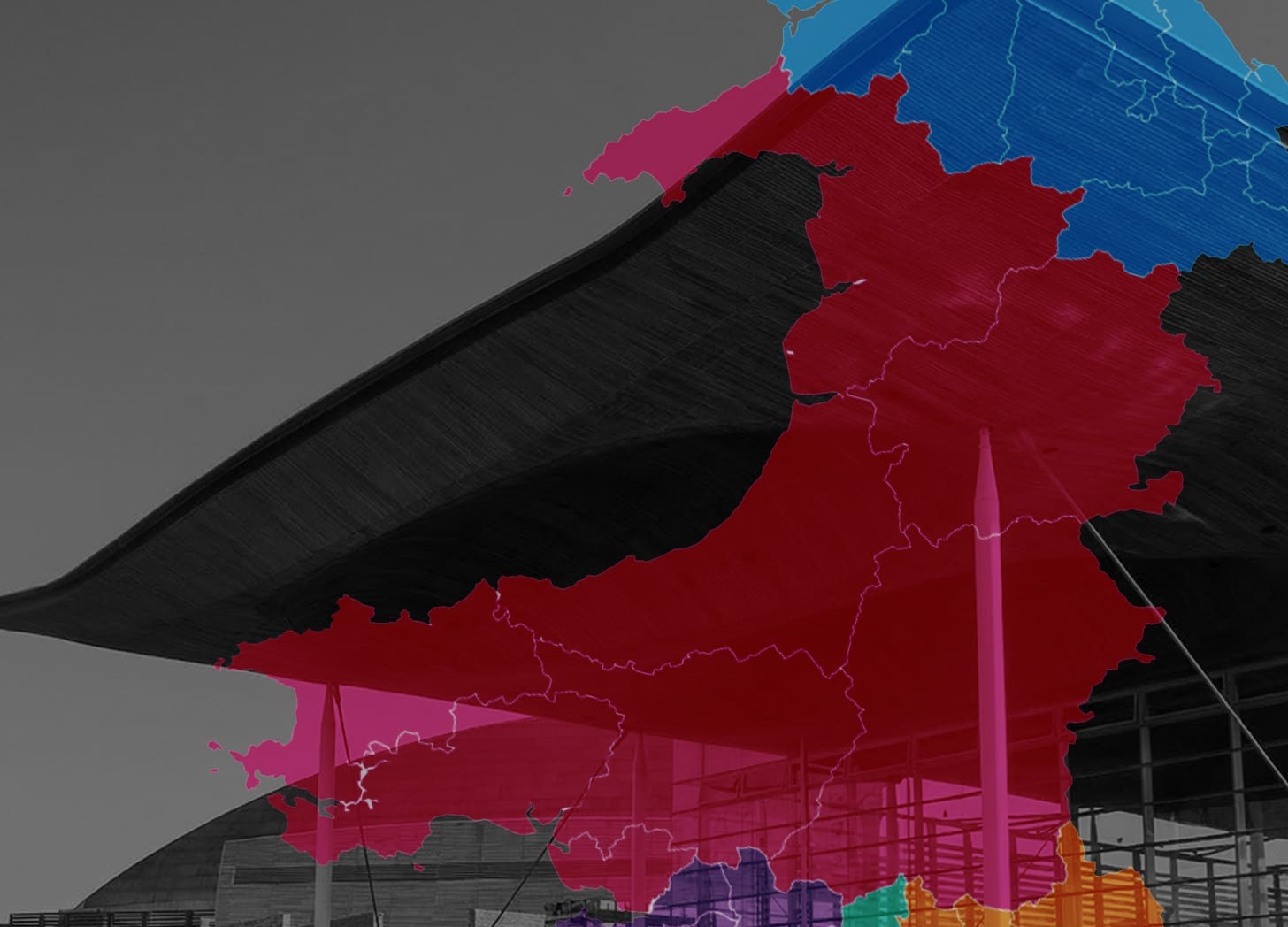
Boundary changes rarely generate much public enthusiasm. They are technical exercises, conducted by committees, reported in small print. But the reforms reshaping the Senedd ahead of the 2026 Welsh Parliament elections are something more than administrative tidying. Wales is moving to a significantly expanded chamber, elected under a new system, in redrawn constituencies. That combination — new boundaries, new method, new scale — creates something genuinely unusual in democratic politics: a moment where the slate is not quite clean, but is considerably cleaner than normal.

What Is Actually Changing

The Senedd is expanding from 60 to 96 members, elected under a closed list proportional system across 16 larger constituencies, each returning six members. The previous first-past-the-post element is gone. The boundaries themselves are new.

This is a substantial structural change. It alters how votes translate into seats, how constituencies relate to communities, and how many representatives’ Welsh voters will have access to.

Whether those changes improve democratic representation depends less on the mechanics than on how politicians, parties, and voters choose to inhabit the new system.

The Opportunity in Disruption

Established political systems accumulate habits. Representatives develop relationships with their patches. Parties build local structures around existing boundaries. Voters form attachments, however loose, to particular representatives. Boundary changes disrupt all of this, which is usually experienced as a problem.

It can also be an opportunity. New constituencies mean new conversations about what those places are, who represents them, and what representation should look like. Communities that felt peripheral in old boundaries may find themselves more central in new ones. Representatives who relied on incumbency rather than engagement face a more open field.

Disruption, handled well, can reset relationships between voters and representatives in ways that are genuinely healthy.

The Closed List Problem

The shift to a closed list system deserves scrutiny alongside the optimism. Under this model, parties — not voters — determine the order in which candidates appear on the list, and therefore which candidates are most likely to be elected.

That is a significant concentration of power within party structures. It is, in some respects, the opposite of what the Open Party advocates: rather than expanding voter choice in candidate selection, it narrows it. Voters choose parties; parties choose representatives.

This tension is worth naming clearly. Proportional representation can produce fairer outcomes in terms of vote share. It does not automatically produce more accountable or more accessible representatives.

What Reset Actually Requires

A genuine democratic reset requires more than redrawing lines on a map. It requires candidates who treat new constituencies as invitations to listen, not just to campaign. It requires parties willing to select candidates who reflect the communities they will serve. And it requires voters who see the disruption as an opening rather than an inconvenience.

The Open Party‘s open primary model is particularly well-suited to this kind of moment. When everything else is new, the question of who should represent a place is genuinely open. Putting that question to the wider public — rather than resolving it in a party selection meeting — seems not just defensible but obviously right.

A Window That Will Not Stay Open

Boundary changes of this scale happen rarely. The 2026 Senedd elections represent a genuine inflection point for Welsh democracy — a chance to establish new habits, new relationships, and new expectations between representatives and the people they serve. Windows like this do not stay open. The question for Welsh politics is not simply who wins the new seats, but what kind of representation those seats are used to build.

Dydd Gŵyl Dewi hapus. St David’s Day is a moment to celebrate Welsh culture, pride, and identity. But St David also left us something practical: a way of living that we think still matters today.

His final words were simple: gwnewch y pethau bychain. Do the little things.

That’s worth taking seriously.

What the little things actually look like

It’s easy to feel like your voice only counts once every few years, if it counts at all. Politicians make grand promises. Not much changes. And the gap between people and those who are supposed to represent them keeps growing.

Yet real change in communities rarely comes from big announcements. It comes from someone who turns up, listens, and follows through; someone who fixes what they said they’d fix and gets back to you when they said they would.

That’s the little things. It’s not glamorous, but it’s what trust is built on.

In Casnewydd Islwyn, that’s exactly what the Open Party pilot aims to do: start small, stay local, and earn trust one conversation at a time. We believe this approach can work anywhere that people feel their voices have stopped mattering.

Working with communities, not above them

St David lived and worked alongside people rather than above them.

That’s a model worth following. Communities across Wales — from the valleys to the coast, from market towns to city neighbourhoods — deserve genuine involvement, not management from a distance.

Every voice matters. Every neighbourhood has something to teach. Furthermore, decisions made with people rather than for them tend to reflect real life far better than those made from afar. That’s as true here as it is anywhere.

Care and Dignity

Wales faces real pressures: stretched services, cost-of-living worries, and towns and villages that feel forgotten.

People dealing with those pressures deserve straight answers and genuine respect. They deserve services that someone built around actual needs — not an obstacle course to navigate. And they deserve honesty when something isn’t working, rather than a polished non-answer.

None of that is a big ask. It should be the baseline, not the exception. Moreover, it shouldn’t take a particular postcode to expect it.

Pride in place, room for everyone

Wales is made up of distinct places, each with its own character, language, and history.

St David’s Day reminds us that where we come from matters. People want to feel connected to their community — and to feel like their community values them back.

The strongest communities make room for everyone: long-standing residents, newcomers, Welsh speakers, people from all sorts of backgrounds. Pride in place and openness to people aren’t in tension. In fact, they belong together. That holds wherever you are in the world.

Openness and Honesty

St David was straightforward; no pretence, no performance.

That’s something a lot of people are looking for right now, in Wales and far beyond it. They want to know how decision-makers reach their conclusions, who’s involved, and why. They want a genuine say: not a tick-box consultation, not silence between elections.

Openness means showing your work. It means changing direction when you hear something better and — crucially — making it easier, not harder, for people to get involved, especially those who wouldn’t normally put themselves forward.

Values in Action

St David’s Day isn’t just a celebration. It’s a prompt: are we actually doing the little things? Are we listening? Are we following through?

At Open Party, we’re trying to answer yes — starting in Casnewydd Islwyn, and building a model we hope can travel to other parts of Wales, and to communities elsewhere asking the same questions.

So if that sounds like something you want to be part of, we’d love to hear from you. Come to a conversation. Let us know what the little things look like in your community.

Diolch — and happy St David’s Day.

The Open Party — Casnewydd Islwyn Pilot | Register/get involved at openparty.uk